Your device can be unreachable for several reasons, not just CGNAT. Here is why inbound access fails and how outbound-first remote access gets you back in.
Continue Reading
Your device can be unreachable for several reasons, not just CGNAT. Here is why inbound access fails and how outbound-first remote access gets you back in.
Continue Reading
Set up Dynamic DNS for a home Plex or Jellyfin server: create a hostname, run an update client, forward one port, and fix what usually breaks.
Continue Reading
What white label and reseller Managed DNS mean in practice for MSPs, how the two models differ, and where the No-IP MSP Multi-Tenant Platform fits.
Continue Reading
Dynamic DNS on Synology and QNAP NAS (Network Attached Storage) boxes: No-IP is already in the built-in provider list, so setup is a menu pick. Plus the custom route and fixes.
Continue Reading
What No-IP’s free Dynamic DNS tier includes, why free hostnames need confirming every 30 days, and the four signs it is time to move to a paid plan.
Continue Reading
Getting a “reverse DNS does not match SMTP banner” error? Learn what causes it, how it hurts deliverability and what it means for DMARC, plus how to fix it.
Continue Reading
DNS outages shouldn’t start with a client phone call. See how centralized DNS management changes how MSPs diagnose, fix, and prevent DNS fires.
Continue Reading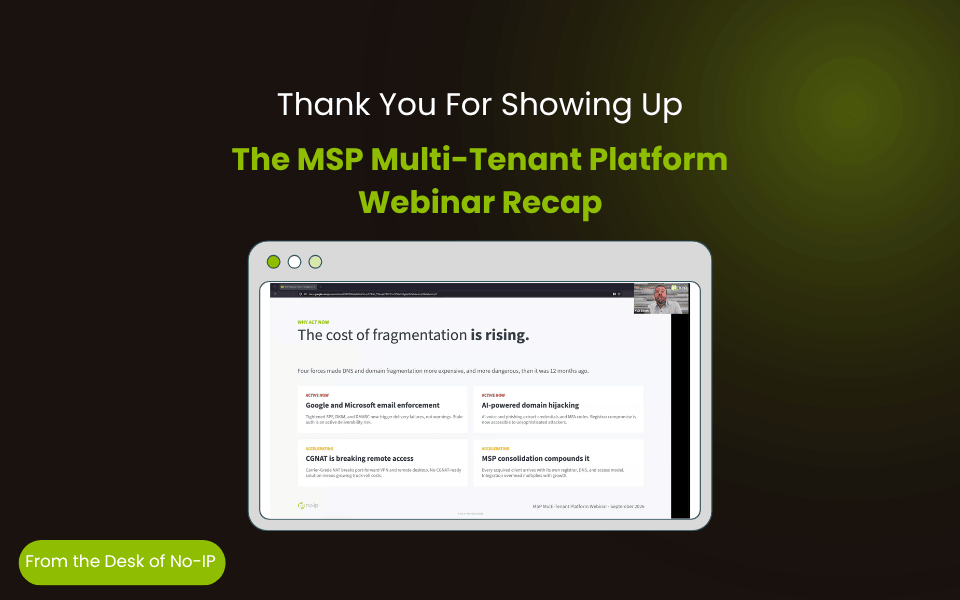
We’re thanking every MSP who registered and showed up for our MSP Multi-Tenant Platform webinar, recapping the demo, and breaking down the platform for anyone who missed it.
Continue Reading
VPN or Zero Trust? Compare attack surface, setup, and cost for MSPs managing client remote access — and see how to migrate without disruption.
Continue Reading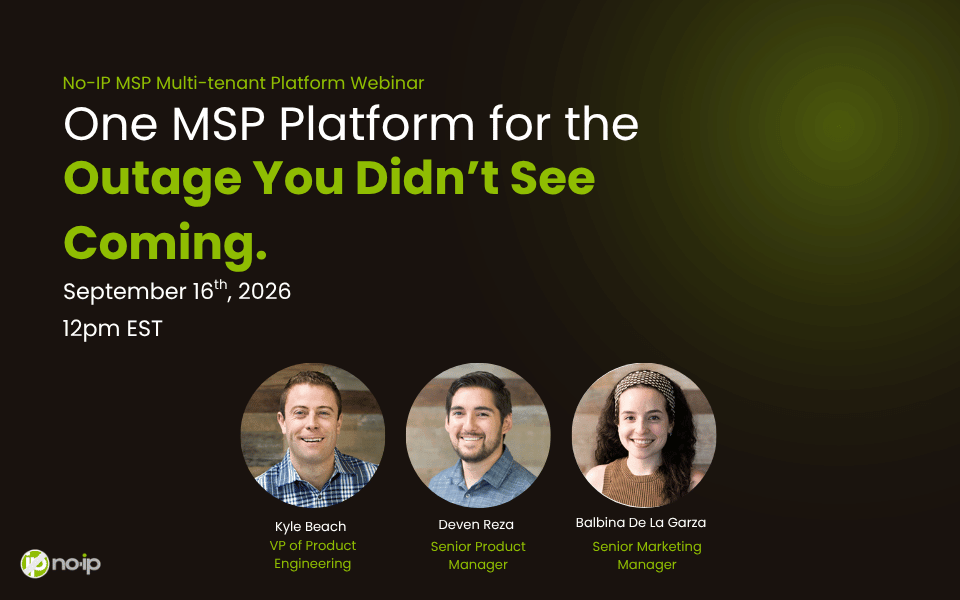
Register for No-IP’s live webinar on Sept 16 to see the MSP Multi-Tenant Platform demo: every client’s DNS, domains, and remote access in one dashboard.
Continue Reading