If SSL certificate validations are changing.
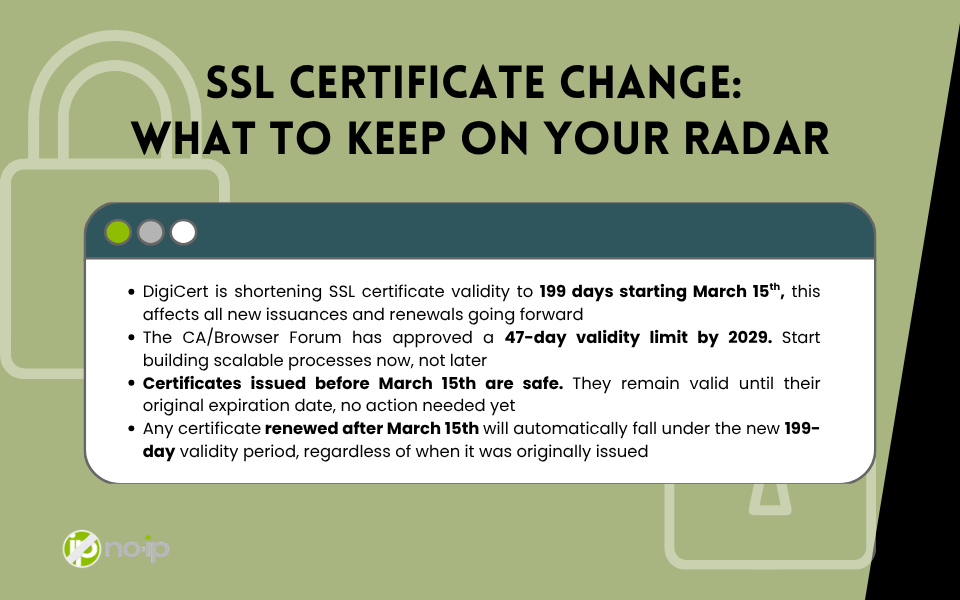
DigiCert is shortening SSL certificate validity from 2 years to 199 days, effective March 15th. But this isn’t just a DigiCert policy update. It’s the first phase of a broader industry shift. In fact, the CA/Browser Forum has already approved a roadmap to reduce public SSL certificate lifespans to just 47 days by 2029.
The reasoning? Shorter windows of validity reduce the risk exposure of any single certificate. The tradeoff is that renewals become a much more active operational responsibility. For MSPs and IT teams managing certificates across multiple client environments, that overhead adds up quickly, which makes getting ahead of this change now worth the effort.
Why Is This Change Happening?
The case for shorter certificate lifespans is a legitimate one. The longer a certificate stays valid, the longer a compromised, misconfigured, or outdated cert can sit undetected. Therefore, a two-year validity window leaves a lot of time for things to go wrong before a renewal forces a clean slate.
Shorter lifespans mean certificates get cycled through more frequently, which limits the threat of any single compromised cert, and ensures cryptographic standards stay current. The shorter validity window also reduces the vulnerability where a certificate issued to an unauthorized party could go unnoticed.
The 47-day target by 2029 signals that the industry isn’t stopping here. This is the direction SSL/TLS standards are heading, and the March 15th change is the first substantial step in that direction.
How Will the Change Affect My SSL Certificates?
For Existing SSL Certificates
If you have certificates issued before March 15th, they’ll remain valid through their original expiration date. The new 199-day rule doesn’t shorten any certificate already in progress. Therefore, there’s no immediate disruption to existing deployments.
What does change is what happens at renewal: Any certificate renewed after March 15th will be issued under the new 199-day validity period, regardless of when the original cert was issued. That means even long-standing certificates will transition to the shorter lifespan on their next renewal cycle.
It’s worth auditing your certificate inventory now to understand which certs are coming up for renewal in the months following March 15th so you’re not caught off guard.
For New SSL Certificates
Any new SSL certificate issued after March 15th will be valid for 199 days — no exceptions. If you’re deploying new environments or onboarding new clients after that date, build the shorter validity window into your planning from the start.
For teams already juggling a number of certificates, this doubles renewal frequency in the near term, effectively. In addition, the 47-day window coming up in 2029 will increase workload managing renewals. Getting tracking and automation in place now is the move.
What Do You Need to Do?
1. Plan Ahead for Certificate Renewals
The biggest priority is staying on top of your renewal tracking. With certificates expiring more frequently, any gaps in your process will surface faster than they did before.
Do a full inventory of certificates across your managed environments. For example, note expiration dates, associated services, and the owners of each renewal. If you’re managing this manually today, it’s worth evaluating whether that process scales to a 199-day cycle now, and a 47-day cycle in a few years. Getting that infrastructure in place before renewals start piling up is a lot less stressful than building it under pressure.
2. Understand Your Compliance Needs
Not every environment has the same requirements. Regulated industries like healthcare, finance, and government have additional compliance obligations around certificate issuance and validity. These obligations go beyond the baseline CA/B Forum standards.
Furthermore, It’s worth keeping an eye on how other CAs respond to these changes over the incoming months. Timelines and requirements don’t always align perfectly across CAs. If you’re working across multiple providers, you’ll want a clear picture of where each one stands.
3. Explore No-IP’s SSL Certificate Service for Easy Management
If managing certificates across multiple environments is already starting to become a pain point, then automation is your next best friend. No-IP’s SSL certificate services are built to take the complexity out of certificate lifecycle management. Thus, handling tracking and renewals so your team isn’t chasing down expiration notices across a dozen client environments. With the industry moving toward shorter and shorter validity periods, having a reliable management layer in place isn’t optional. It’s the foundation of a scalable remote access and security setup.
What Are SSL Certificates and Why Do They Matter?
If you need a quick refresher, here’s the short version.
An SSL certificate does two things: it encrypts the data exchanged between a browser and a server. Two, it verifies the server’s identity. That padlock icon in the browser address bar? That’s the certificate confirming the connection is secure, and the site is legitimate.
From a practical standpoint, SSL certificates matter for three reasons.
- Security protects data in transit from interception.
- Trust that browsers actively flag sites without valid certificates as “Not Secure,” which stops most users cold.
- SEO as Google treats HTTPS as a ranking signal, so a properly secured site has a measurable advantage.
The trust model behind all of this relies on CAs like DigiCert acting as a verified third party. When a browser connects to a server, it checks whether the certificate was issued by a recognized CA and whether it’s still valid. If either check fails, users get a warning. Want to know more about SSL Certificates or have any more questions? Our Customer Success Knowledge Base has a robust list of guides and articles.